- Agriculture
- No Comment
US: Federal judge rules against Zimbabwe in $320m dispute; says awards can be enforced in the US

By Agencies
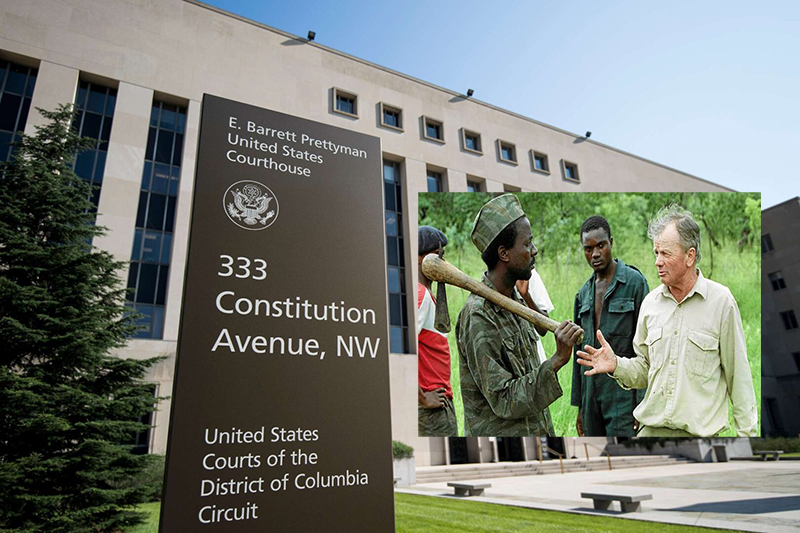
WASHINGTON, D.C. — A District of Columbia federal judge recently granted the enforcement of two International Centre for Settlement of Investment Disputes (ICSID) awards worth more than $320 million against Zimbabwe in a decades-long multinational dispute.
One of the awards is in favour of the Swiss and German owners of Zimbabwean plantations while the other is for the plantation companies, with the judge finding that no genuine disputes of material fact precluded enforcement.
In a determination made available on July 24, U.S. Judge Amit P. Mehta of the District of Columbia reviewed and rebuffed all arguments raised by Zimbabwe opposing the enforcement of the awards against it.
One award was issued in favour of Elisabeth Regina Maria Gabriele von Pezold and several of her family members, who hold ownership rights to three estates that include plantations in Zimbabwe.
The other was in favour of two companies that own the plantations, Border Timbers Ltd. and its subsidiary Hangani Development Co. (Private) Ltd. (collectively, Border Timbers).
Both awards were issued by ICSID tribunals against Zimbabwe after the Harare administration damaged and partly expropriated the plantations, and the parties filed suit to enforce the awards in the District Court pursuant to the statute implementing the ICSID Convention.
The judge said Zimbabwe’s argument that it is immune from execution of the awards under Zimbabwean law is irrelevant to the present phase of litigation and does not preclude a grant of summary judgment.
“Respondent’s argument elides the well-established distinction between ‘execution’ and ‘enforcement.’ . . . Enforcement is ‘the reduction to a judgment of an international arbitral award,’ while ‘execution’ is ‘the means by which a judgment enforcing an international arbitral award is given effect’ — in other words, the process of leveraging that judgment to obtain assets. . . . At present, Petitioners seek only enforcement. Congress expressly granted jurisdiction to the district courts to issue such judgments. Meanwhile, the cited provision of Zimbabwean law speaks only to execution.

“Thus, regardless of the merits of Respondent’s arguments as to execution — an issue on which the court offers no opinion — that is entirely separate from the present request for enforcement.”
Continued Operations?
Judge Mehta also rebuffed Zimbabwe’s argument for “setoff” based on the von Pezolds’ and Border Timbers’ continued operations of the land and plantations at issue, which Zimbabwe said should be applied as a “debt” against the awards.
This issue “falls outside the court’s limited scope of review,” Judge Mehta wrote.
“The tribunal awarded Petitioners one of two sums certain depending only on whether Respondent timely made restitution. It did not condition the amount on whether Petitioners operated the land, as it did for other elements of the award. . . . The court is not empowered to reconsider that choice,” the judge wrote.
He also noted that no evidence was presented regarding the specific value of a setoff, proving that the petitioners are operating the expropriated assets or establishing the value they have allegedly derived from them.
For similar reasons, the judge rejected Zimbabwe’s argument that the petitioners failed to join a necessary party, the company to which they allegedly sold their assets and that allegedly is operating them and receiving profits.
The judge said that joinder is “unnecessary” because Zimbabwe failed to properly allege a setoff defence and that its joinder argument was “cursory” and independently insufficient.
Judge Mehta rejected Zimbabwe’s argument that the court cannot allow post-award interest granted by the tribunal to be part of its judgment, writing, “The court must enforce the award as written.”
Judge Mehta directed the parties to file a draft final judgment by July 31.
Zimbabwe Estates
The dispute arose over three estates in Zimbabwe dating back to the early 20th century: an estate with a tobacco growing and curing operation, a forestry operation with pine and eucalyptus plantations, and a mixed plantation used for growing coffee, bananas, maize, macadamia nuts, avocados and timber for the production of timber poles.
Beginning around 2005, Zimbabwe compulsorily acquired the estates pursuant to a constitutional amendment changing the nation’s property laws. Property that belonged to the von Pezolds and to Border Timbers was damaged and partly expropriated.
The von Pezolds and Border Timbers then commenced simultaneous, nonconsolidated arbitrations before the same ICSID tribunal against Zimbabwe for breaches of the German-Zimbabwe BIT and Swiss-Zimbabwe BIT.
In July 2015 awards, the von Pezolds won $195,001,163, while Border Timbers won $124,041,223 in damages, $1 million in moral damages, plus interest, costs and expenses. Zimbabwe’s applications to annul the awards were denied Nov. 21, 2018.
The von Pezolds filed a petition to confirm in the U.S. District Court for the District of Columbia on July 23, 2021, and Border Timbers filed its petition on Sept. 15, 2021, both pursuant to the ICSID Convention.
On Sept. 6, 2022, Judge Mehta granted Zimbabwe’s motions to dismiss both petitions due to improper service but granted the petitioners leave to re-serve Zimbabwe. On Aug. 9, 2023, Judge Mehta denied renewed motions to dismiss filed by Zimbabwe.
Zimbabwe then appealed to the District of Columbia Circuit U.S. Court of Appeals, which on Nov. 13, 2024, affirmed. The case was remanded to the District Court where the petitioners filed separate motions for summary judgment.
On Sept. 6, 2022, Judge Mehta granted Zimbabwe’s motions to dismiss both petitions due to improper service but granted the petitioners leave to re-serve Zimbabwe. On Aug. 9, 2023, Judge Mehta denied renewed motions to dismiss filed by Zimbabwe.
Zimbabwe then appealed to the District of Columbia Circuit U.S. Court of Appeals, which on Nov. 13, 2024, affirmed. The case was remanded to the District Court where the petitioners filed separate motions for summary judgment.