- Arts & Culture
- No Comment
US: At 90, Zimbabwean art specialist still works 6 days at gallery considers ‘gift from God’

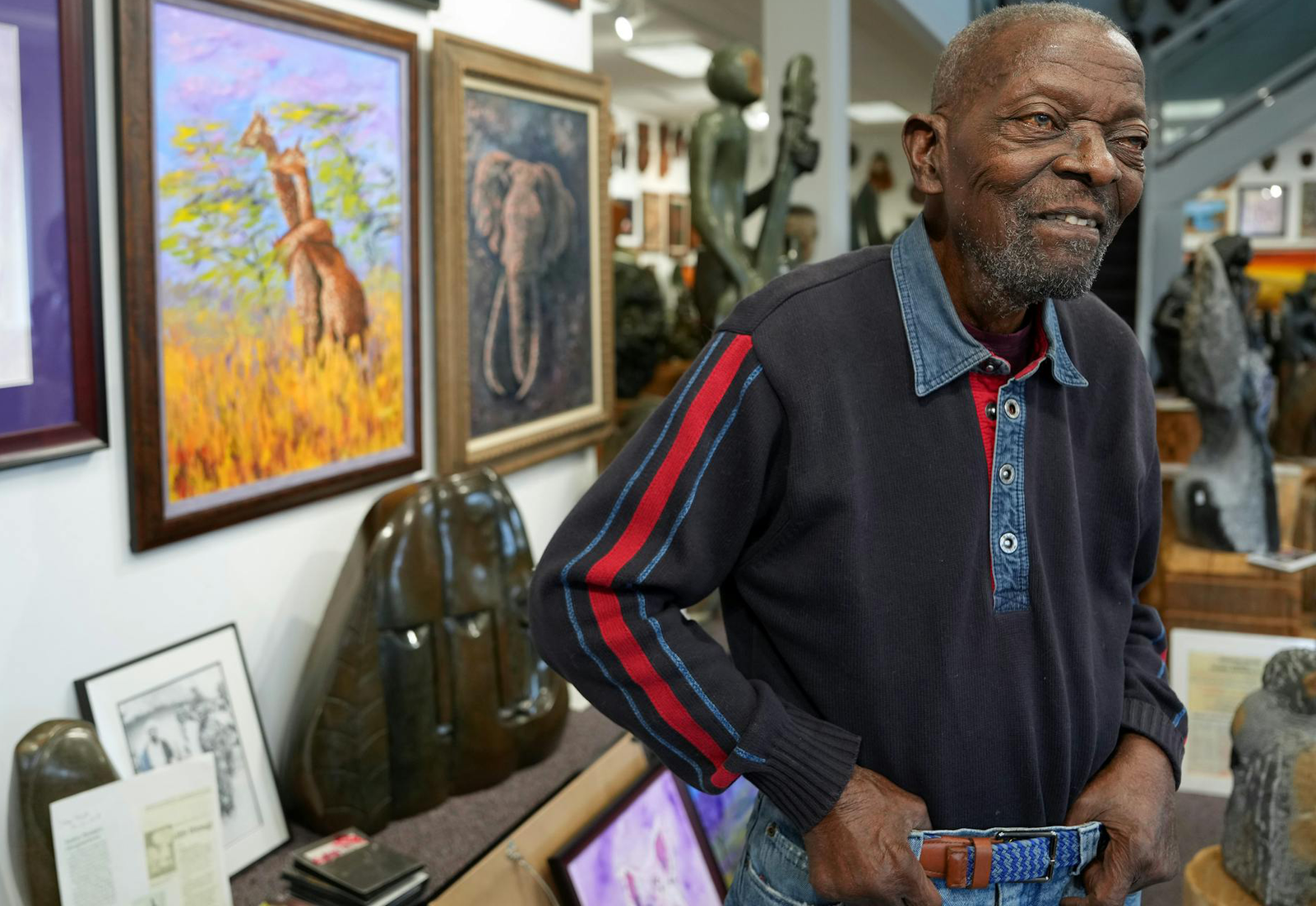
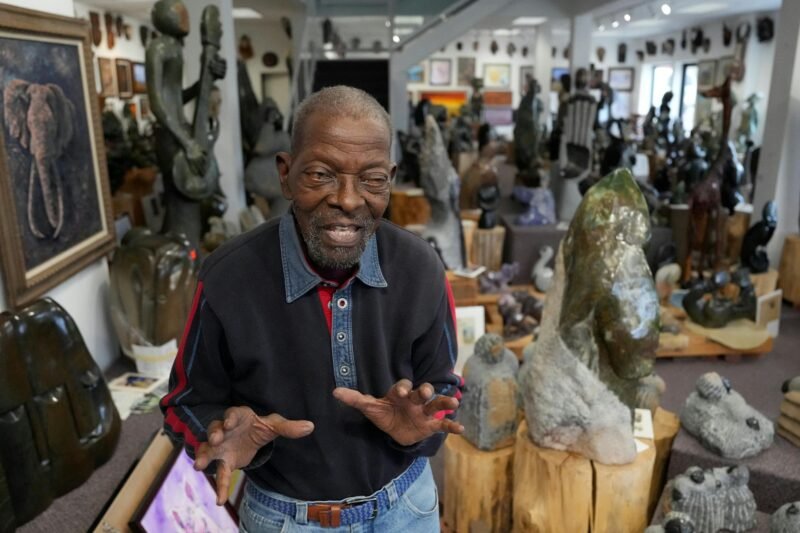
When gallery owner Rex Mhiripiri saw a gas station at 90th Street and Penn Avenue S. in Bloomington, he didn’t see just gasoline. He saw the future home of his huge two-story Mhiripiri Gallery.
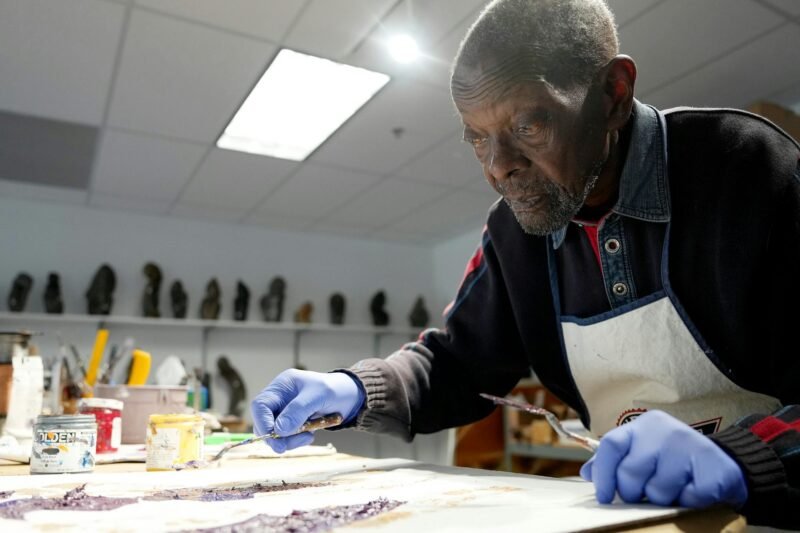
That was nearly 20 years ago. At 90, he’s still working six days a week, answering every phone call, whether it’s local, spam or from his native Zimbabwe. And he’s painting. Always painting.
“It’s a gift from God,” Mhiripiri said of his gallery.
Before the Bloomington spot, he was in Butler Square, two other downtown Minneapolis locations and then in Edina.
Mhiripiri is one of a handful of Twin Cities gallerists in business since the 1980s, and the only local dealer specializing in African art and specifically Shona stone sculpture from Zimbabwe. Last month, he put the building and all the artwork in it up for sale.
The asking price? $4 million.
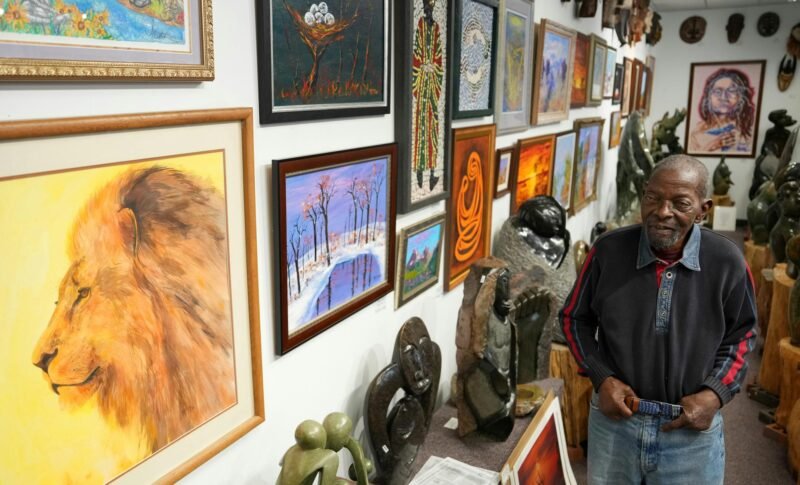
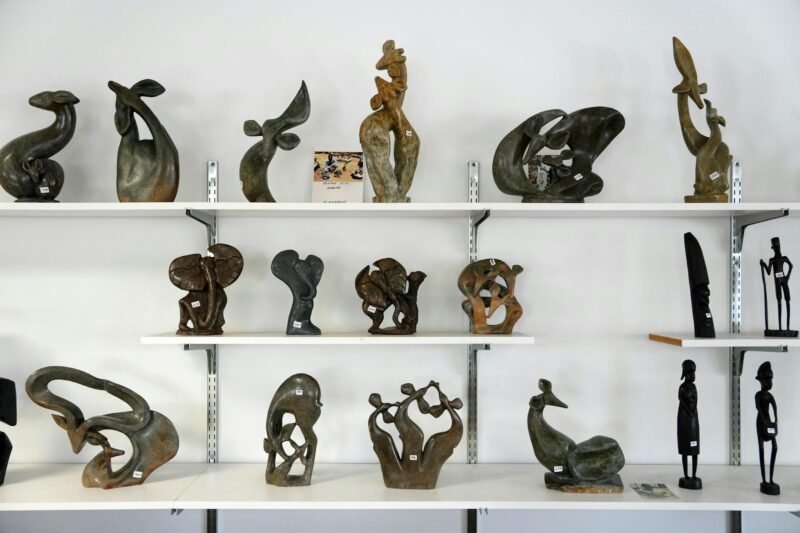
The spacious gallery is filled with Zimbabwe stone sculptures made of springstone, serpentine, opal stone and other stones. They depict families, pregnant women, mothers, daughters, sons and many animals.
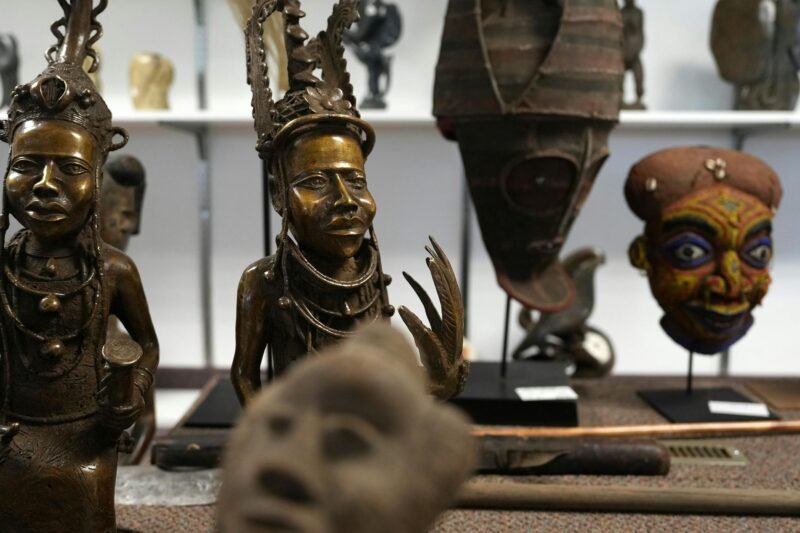
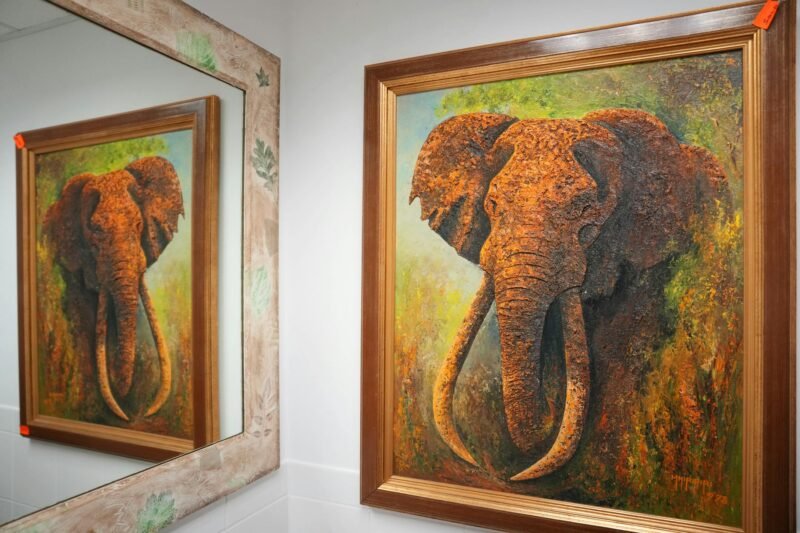
African masks and Mhiripiri’s paintings of elephants, other animals and landscapes cover the walls. Prices range from $15 to $150,000.
Internationally acclaimed Zimbabwe artists Colleen Madamombe, Bernard Matemera and Henry Munyaradzi still show their works with him. A stack of catalogues from Matemera’s 1997 show in Paris is still in the gallery.
He keeps photographs of artwork and artists and trips to Zimbabwe in piles and wooden boxes.
‘A gem in … the African art world within the U.S.’
Mhiripiri, who still works six days a week, always has seen himself as the family’s provider.
“I work to protect my wife from want [for anything],” he said. “We had seven children, and she was a stay-at-home mom. It’s my job to make sure that she has everything that she needs.”
Some years, the gallery grosses more than $1 million. A client just flew in from Washington, D.C., and bought $250,000 worth of work.
Renowned Twin Cities painter and public artist Ta-coumba T. Aiken, 72, met Mhiripiri in the mid-1980s.
“He had a store and he had a gallery and he was working on his paintings there in the gallery, and actually doing the work ― not just showing work,” Aiken said. “That’s rare.”
Aiken loved Mhiripiri’s elephant paintings with scenery. He felt they were “just amazing, and not like anything that I saw anywhere else,” he said. “And by that time, I had seen a lot of art.”
At the time, Aiken was studying Black modernist painter Loïs Mailou Jones, one of the first African American artists to put African art into her work. Aiken began tracking other African American artists who did the same.
“But Rex didn’t care about that sort of thing, he was like, ‘I’m just painting, I’m doing my work,” he said.
Aiken bought some of Mhiripiri’s artworks, and Mhiripiri sold some of Aiken’s paintings, and they gifted works to each other.
Unlike most gallerists who work on commission, Mhiripiri buys everything outright and sells it.
Former University of Minnesota Prof. Roderick Ferguson started collecting from Mhiripiri in 2009.
“People probably don’t know how much of a gem Rex is in terms of the art world and the African art world within the U.S.,” said Ferguson, 53, chair of the Women’s, Gender and Sexuality Studies Department at Yale University.
Mhiripiri sold him an 18th-century gun used in the slave trade and manacles used in the Congo during King Leopold’s era, to name a few. As a scholar, Ferguson finds these artifacts irresistible.
Steve Wadsworth, 59, founder of 4 Seasons Construction Inc., randomly stopped into Mhiripiri Gallery about 12 years ago. He and Rex became fast friends.
At the end of Wadsworth’s driveway, there’s a statue from Mhiripiri Gallery of an adult holding four kids.
“Anybody who comes to our house knows that family comes first,” Wadsworth said. Over the years, he’s bought about 30 paintings and sculptures from Mhiripiri.
Rex and Julie Mhiripiri have helped build wells in Zimbabwe and put four kids that weren’t their own through college.
When Wadsworth buys art from Mhiripiri, Mhiripiri donates a certain percentage of that to help people in Zimbabwe.
“That makes me feel good,” Wadsworth said. “I don’t have a connection to help people like that.”
From Zimbabwe to Minnesota
Mhiripiri’s journey to Minnesota wasn’t at all linear. Born in 1935, in Wedza, Rhodesia, (now near Harare, Zimbabwe) Mhiripiri felt stifled by life under the white-run British Commonwealth. There were few career opportunities for Black people.
In 1958, after being told not to come back to teacher’s college in Rhodesia, he moved to Tanganyika (now Tanzania), then through Uganda to Kenya. He worked as a salesman for Mobil Oil Co. and later the Kenyan government.
In 1966 he came to the United States on a State Department scholarship, starting at the University of Rochester in upstate New York before transferring to the University of Minnesota. There he met his wife, Julie, of Albert Lea, who is white.
They eloped to Kenya in the early 1970s. But with Rhodesia at war, they decided to return to Minnesota.
After struggles with alcohol, Mhiripiri got sobre at a Christian rehab in Montreal. At 40, he became a committed follower of Jesus.
But it wasn’t until the mid-1980s that he met a missionary who had travelled to Zimbabwe. That man introduced him to Shona stone sculpture ― and that’s when it clicked. He needed to go back to Zimbabwe and buy art.
In 1995, thanks to the generosity of a few interested collectors, he and Julie travelled to Zimbabwe for five weeks. He shipped back 81 crates of stone sculpture weighing about 24 tons. They returned every few years, building relationships with artists and importing stone sculpture. His last trip was in 2022.
When it’s slow at the gallery, Mhiripiri paints in his studio on the second floor, often crafting his signature elephant.
On a quiet Tuesday afternoon in October, he wore loose-fitting jeans, a blue polo shirt and a smock with the 1992 Super Bowl XXVI in Minneapolis printed across it.
He used a palette knife, smoothing chunks of purple paint onto a canvas. A Christian rock radio station blasted over the speakers.
Mhiripiri wonders about the future of the gallery.
“If God gave me this thing ― and I believe he did ― then God will help me to get rid of it,” he said.