- Agriculture
- No Comment
Rising fuel costs hit Zimbabwe farmers, threatening food supply

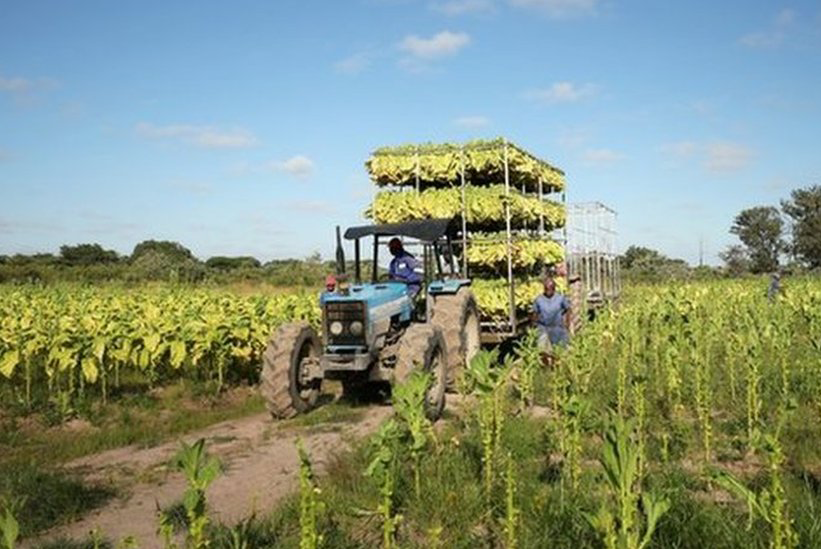
Fuel price increases in Zimbabwe are linked to the war in the Middle East, which has disrupted a key Strait of Hormuz route and pushed up costs. The pump price of fuel is now US$2,11/ℓ for diesel and US$2,23/ℓ for petrol.
Some farmers fear they may be forced to limit operations or give up mechanised farming altogether if fuel prices continue to rise.
“Production now requires more money at every stage,” Rixon Nyamakura, a farmer from Macheke in Mashonaland East, told Farmer’s Weekly.
“As the rainy season comes to an end, we will be switching back to irrigation, which means we will be largely dependent on fuel. Some farmers may cut back on hectares because the expense of machinery is too high for them.
“I planted 2ha of Trinity tomatoes, which I am currently harvesting. The good thing about them is that they can be harvested for three to four months. But I need almost 80ℓ of diesel to pump water on the 2ha, which I do twice a week,’’ Nyamakura explained.
“The prices of many inputs – including pesticides, fertilisers, and seeds – may rise, as some come from outside the country. One thousand Trinity tomato seeds cost US$65, so for 2ha I bought 40 000 seeds, which cost me US$2 600.
“I also have transport costs for taking produce to the market: US$250 for a 5t truck to carry 300 crates.”
Supply disruptions at market
At Mbare Musika, Harare’s largest fresh produce market, farmers like Prosper Katsande from Sedze in Nyanga, Manicaland Province, have reported noticeable changes in supply patterns.
He explained that rising transport costs are forcing producers to make difficult decisions about getting their produce to the market.
“I take 200 pockets of onions to Mbare Musika each time. I used to rely on buses to transport my produce, but it has become too expensive.
“It used to cost me between US$0.50 and US$1 per pocket, but now it is US$2. That brings my transport cost to about US$400, excluding bus fares for six people, which are now around US$12 each.”
The rising costs have forced him to secure other alternatives. “I’m now hiring a truck, which costs less than US$300 per trip. It’s still expensive but easier to manage than buses.”

“We used to sell a 22kg pocket of onions for US$16, but now we sell it for US$24 so we can cover transport costs and make a small profit,” Katsande added.
“In my fields currently, I have butternuts, onions, and other vegetables. I use river water to irrigate my crops, which means I need a lot of fuel to run the generator for pumping.”
Perishables at risk
Fresh produce is vulnerable to delays in reaching the market, as it can spoil without reliable transport.
Areas like Mutoko, Mhondoro, Goromonzi, Nyanga, Domboshava, and Honde Valley are prominent horticultural production regions.
“Sometimes we have tomatoes, cabbages, and butternut ready for market, but if you do not have affordable transport and you delay delivery, the produce will go bad and incur losses,” Goromonzi farmer Ottknow Mupakaviri said.
He supplies Mbare Musika with 3 000 heads of cabbage every day and has been severely impacted by rising fuel prices.
“Since the [war] in the Middle East began, my business has slowed. I used to push 3 000 heads of cabbage daily, but now I’m only selling 300.
“Fuel [costs] have affected everyone, as some of our clients can no longer afford the bus fare to travel to market. I hired a 10t truck for US$220, which was previously US$150,” he explained.
“I have no option but to charge US$1 for five heads of cabbage, instead of US$1 for two, so I can make a small profit rather than let them rot,” he concluded.
Call for fuel-conscious farming
Ivan Craig, sales and marketing director at Agriseeds and chairperson of the Agricultural and Rural Development Authority, has urged farmers to adopt more fuel-conscious and cost-effective approaches amid rising energy costs.
“Farmers must use wisdom in their operations and focus on methods that do not lead to loss. Train your staff properly, make sure nothing goes to waste, and use every resource wisely,” he said.
He called for proper planning and management of farm inputs as critical to remaining productive and avoiding overspending.
“Don’t use tractors and heavy machinery unless it’s necessary, as they consume a lot of fuel and can quickly drive up costs,” he warned, adding that farmers need to strike a balance between economic viability and practicality.
Craig also encouraged farmers to consider traditional yet effective practices alongside modern methods.
“Don’t shy away from using ploughs with cattle where appropriate. [Traditional farming methods] are not outdated, as they are often the most sustainable and cost-efficient,” he noted.
“Wise farmers balance modern technology with proven practices, ensuring productivity while safeguarding profitability.”
When Farmer’s Weekly asked about the government’s position on the matter, Permanent Secretary for the Ministry of Lands, Agriculture, Fisheries, Water and Rural Development Prof Obert Jiri responded: “It’s too early to comment or craft a policy on how the Middle East war is affecting our farmers.”