- Features
- No Comment
INDEPTH: Zimbabwe’s youth pay the price of US funding drawdown; employment programs stalled, counseling services cut

By Linda Mujuru I Devex.com
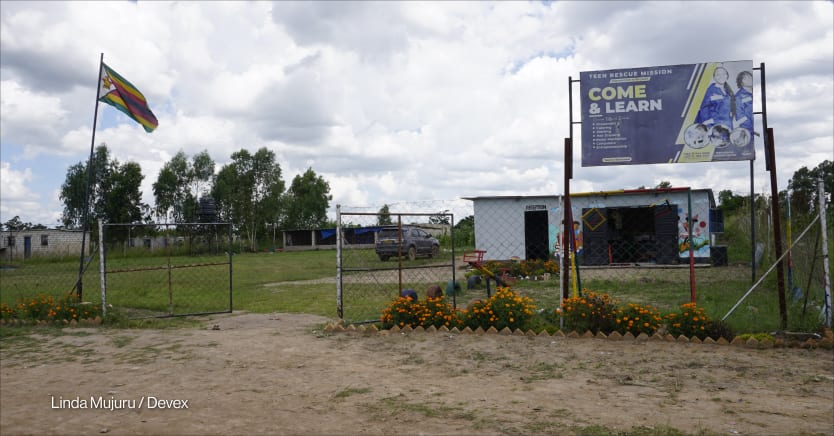
CHITUNGWIZA: In a dusty backyard plot in Chitungwiza, about 20 miles from Zimbabwe’s capital of Harare, 19-year-old Tinashe stands beside a rusted window frame. A year ago, this small space was his classroom, where he spent his mornings learning to fuse metal joints under the guidance of an instructor from Teen Rescue Mission, a local organization supporting youth recovering from drug addiction.
The training was funded with a small grant from the U.S. government. When U.S. foreign assistance was abruptly terminated under the second Trump administration, the project ended before Tinashe received the promised welding starter kit — including cables, safety gear, and clamps — or the follow-up mentorship meant to help him find work.
The equipment mattered as much as the training itself, said Tinashe, who asked that Devex not publish his full name for fear of stigma.
“Without tools, you can’t start,” he explained. “No one will hire you if you don’t even have your own basics.” He feels as distant as ever from the vision he held during his training: “I was already seeing myself working, fending for myself.”
Following the funding withdrawal, Teen Rescue Mission suspended the vocational skills program that had been supporting vulnerable teenagers. The program also offered psychosocial counseling to help youth across several communities in Chitungwiza break cycles of drug abuse, early marriage, and risky survival strategies in an area of high unemployment.
Nearly half — 49.2% — of young people aged 15 to 35 in Zimbabwe are not engaged in education, employment, or training, according to the country’s latest labor force survey. Teen Rescue Mission designed its vocational programs, including welding, tailoring, catering, and baking, as a response to that gap.
One year after the project’s closure, 250 young people who once found structure and purpose through the program are navigating uncertainty. A handful still visit the center, taking turns on the remaining sewing machines or baking in a single oven. The welding program, however, has largely stalled due to a lack of fuel and equipment.
The disruption facing Teen Rescue Mission is not unique. Across Zimbabwe, community-based organizations that relied on U.S.-backed grants say abrupt funding withdrawals threaten years of progress.
A fragile recovery ecosystem
Chitungwiza, Zimbabwe’s third-largest urban settlement and home to nearly 400,000 people, has long struggled with high youth unemployment, limited recreational spaces, and heavy reliance on informal labour. For young people — particularly those who have dropped out of school — opportunities are scarce, and the risks of substance abuse and exploitation are high.
For the Girls and Women Empowerment Network Trust, those risks had been mitigated, in part, through donor-funded programming. The organization, founded by women’s rights activist Kumbirai Kahiya, worked to empower adolescent girls and young women in Chitungwiza by creating safe spaces and supporting their education, health, and economic well-being.
The termination of U.S. funding, she said, will set those efforts back.
Kahiya said her organization received small grants from the U.S. Agency for International Development, including through subgrantees such as the East West Management Institute, as well as backing via memberships and collaborations. That funding, about $60,000, was intended to support livelihood initiatives, income-generating projects, skills development, and menstrual and mental health services for adolescent girls and young women. It disappeared without warning.
“We had constructed a greenhouse under one of the USAID-funded projects, and the idea was to train 300 women on sustainable agriculture,” Kahiya said. “When we had just acquired the first crop, the funding was stopped and the training did not continue.”
At the Youth Empowerment and Transformation Trust, a national coalition focused on youth advocacy, leadership development, and policy engagement, the funding loss affected not only its own operations but also those of smaller organizations it supported through subgrants.
Director Rosewita Katsande said the organization lost roughly 70% of its annual $1 million budget following the withdrawal of USAID funding.
Among the canceled projects was a youth entrepreneurship support initiative, implemented by one of its partners, that was designed to support young people to start and run businesses of their choice.
“The project would have provided business management training, mentorship, and opportunities for young entrepreneurs to create employment for themselves and others, but sadly, the project could not continue,” she said.
A ‘crisis of idle youth’
Teen Rescue Mission began working in Chitungwiza to respond to what its founding director, Abraham Matuka, described as a “crisis of idle youth.”
“The idea was not just skills, but transformation,” Matuka said. “Many of these youths were already stigmatized. We were trying to give them tools, confidence, and alternatives.”
For some participants, the organization became a lifeline. Martha Masiya, a 25-year-old mother of two, said she was on the brink of suicide when she first came to the center, overwhelmed by the daily struggle to survive.
“I was deeply depressed because I had no income and no way to support my children,” Masiya said. “This center helped me learn a new skill and gave me hope that I could fend for myself.”
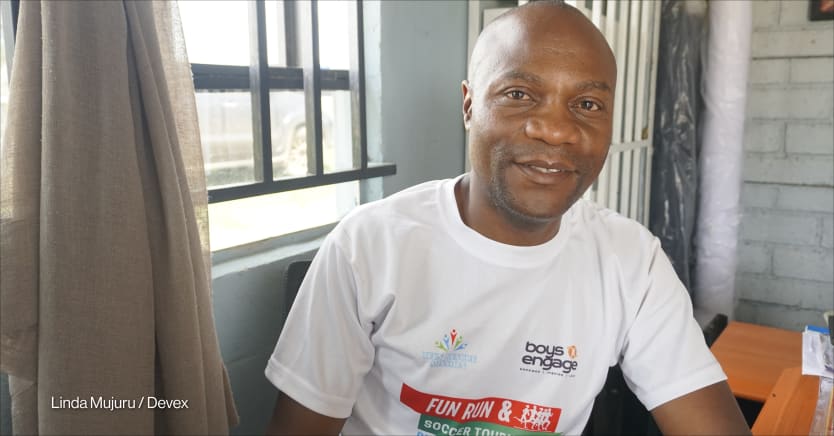
Alongside vocational training, the mission offered group and individual counseling sessions three to four times a month. Participants such as Tinashe relied on those sessions as rare spaces to release stress and talk through their problems — support he said he deeply misses since the programs were halted.
Aside from participating in counseling, trainees were expected to complete their vocational courses before receiving basic starter kits. The center employed five qualified professionals for each of their specific vocations. Matuka has since tried to replace professional trainers with local graduates of the program, but said the transition has been slow and risky.
“In professions like welding, a lot can go wrong if training isn’t delivered by experienced professionals,” he said. “One mistake can lead to serious injury or long-term damage, which is why we had engaged professionals with the right training credentials.”
In 2022, Teen Rescue Mission received $8,000 in U.S. funding with a grant through the U.S. Ambassador’s Special Self-Help Program, which supported local groups to implement small-scale economic empowerment projects. A second grant of $12,000 under the same
program was later approved in 2024, but subsequently canceled after the Trump administration’s foreign assistance review. By the time the funding was halted, the organization had received $9,000 of the second grant; a $3,000 loss, Matuka said, was enough to halt training, cut off starter kits, and end counseling sessions.
Kahiya said those losses carry particular risks for young women and girls. Its programs provided young people with income and livelihood opportunities to keep them engaged and reduce risks like substance abuse, domestic violence, and exploitation.
“It means livelihoods were lost, opportunities to gain skills were halted, and access to health services stopped,” she said.
“When donors support us, we rise. … But when funding is cut abruptly, without warning, it affects us deeply. We don’t want to be donor-dependent, but projects like this were meant to help us become self-sufficient.”
— Troy Zambara, trainee, Teen Rescue Mission
A challenging path to self-sufficiency
In Chitungwiza, the losses are visible in idle sewing machines and unfinished welding projects. After the program ended, Tinashe tried to find informal welding work, but without equipment, opportunities are limited. He now works in day labor, carrying bricks and fixing fences.
“When things get hard, the temptation comes back,” he said, referring to drug use. “At least when we were training, we were busy. We had hope.”
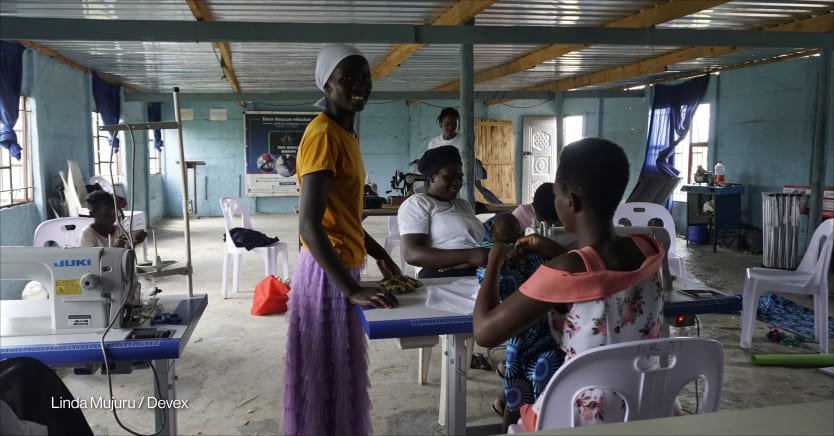
Troy Zambara, 29, is among the few Teen Rescue Mission trainees who managed to continue working after the program was halted. He still practices welding at the center, using the single welding machine.
“When I came here, I did not know welding,” he said. “Now I am a fully skilled welder. This opportunity came at a time when I was abusing alcohol and on the brink of trying stronger substances.”
Zambara now handles most of the steel work for the mission and occasionally takes on jobs for members of the surrounding community, allowing him to earn a small but vital income.
“When donors support us, we rise,” he said. “We become empowered economically, socially, and psychologically. But when funding is cut abruptly, without warning, it affects us deeply. We don’t want to be donor-dependent, but projects like this were meant to help us become self-sufficient.”
Since the funding cut, Teen Rescue Mission has turned to small-scale income-generating activities to survive. Matuka said the organization now keeps broiler and egg-laying chickens and holds lessons for children at the center, although plans to invest in solar power and additional machinery have been shelved. The organization has sought alternative funding, but options are limited.
“We have knocked on many doors,” he said. “Local donors are stretched, and international funding is highly competitive.”
The mission did receive a small, short-term grant from the Canadian Embassy in Zimbabwe, which ends this month.
Kahiya said similar constraints are shaping her organization’s future. Past grants allowed her team to build a gazebo, office, garden, and greenhouse in Chitungwiza. But they require additional funding to invest in agriculture projects and income-generating activities such as fish farming.
“Those are things that we anticipate doing should we get a grant, to sustain our work,” she said.
The pattern is widespread, according to Samuel Wadzai, a philanthropist and the executive director of Vendors Initiative for Social and Economic Transformation, a nongovernmental organization in Zimbabwe. Many community-based organizations rely heavily on donor funding to address structural challenges that the state struggles to meet.
“When projects end abruptly, the burden often falls back on already overstretched families and communities,” he said.
For Tinashe, the welding frame in the yard stands as a reminder of what almost was. He says he still dreams of opening a small metal workshop one day.
“If the program had finished properly, my life would be different,” he said. “Now I’m just waiting … maybe something will come my way.”