- World & Africa
- No Comment
The world’s oldest president seeks an eighth term in Cameroon as youth grumble

By Associated Press
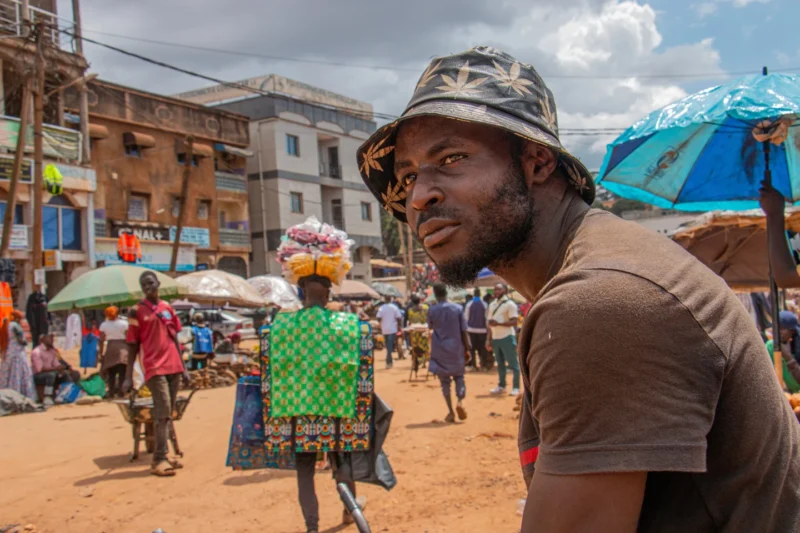
YAOUNDE: Elvis Nghobo tried to get into four different professional schools in Cameroon but could not make it. Frustrated, the 34-year-old turned to selling food at a market in Yaounde, the country’s seat of power.
Nghobo blames his woes on what he calls a corrupt education system which favours children of the elites. As the central African country prepares for Sunday’s presidential election, he said he would not be heading out to vote.
He called the results a foregone conclusion for 92-year-old Paul Biya, the world’s oldest president, who has ruled for Nghobo’s entire life.
“He is already too old to govern, and it’s boring knowing only him as president,” Nghobo told The Associated Press.
The sentiment is shared by millions of the country’s young population, whose median age is 18, in perhaps the most dramatic example of tension between Africa’s youth and the continent’s many aging leaders.
Crisis after crisis
Biya is seeking an eighth term in office in a single-round presidential election where 8.2 million Cameroonians are registered to vote.
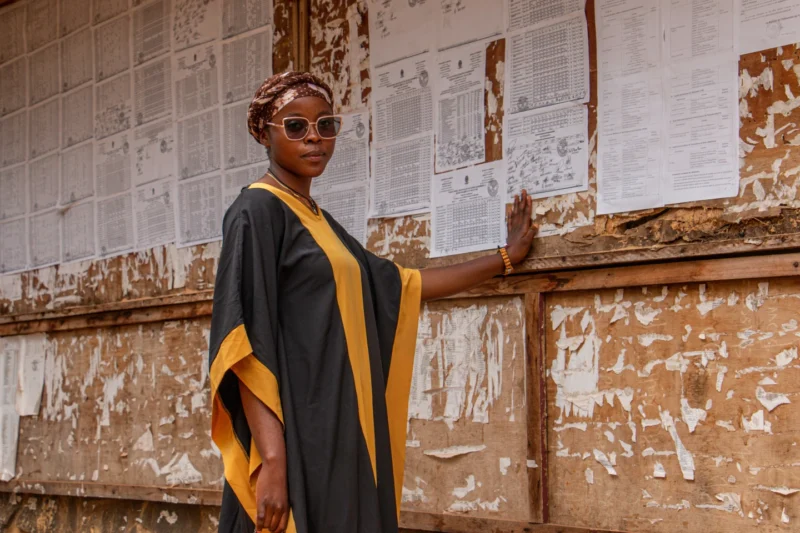
He first became president in 1982 following the resignation of his predecessor, Ahmadou Ahidjo, and has ruled since then. He was declared the winner of seven subsequent elections. Cameroon has seen just two leaders since independence in 1960.
“In the face of increasingly difficult international environment, the challenges facing us are more and more pressing,” Biya said in announcing another run. “In such a situation, I cannot shirk my mission.” He did not give details.
The country’s youth are hungry for jobs. According to World Bank data, the unemployment rate stands at 3.5%, but 57% of the labor force aged 18 to 35 works in informal employment.
Despite Cameroon being an oil-producing country that is experiencing modest economic growth, young people say the benefits have not trickled down beyond the elites.
The country also faces escalating security crises. In the western region, a secession fight has long brewed mainly among English-speaking citizens who claim they are marginalized by the French-speaking majority. In the north, the Boko Haram insurgency spills over from neighboring Nigeria, with armed groups routinely attacking border towns.
Biya in this election is challenged by nine opposition candidates, including some former allies and appointees. They include Issa Tchiroma Bakary, who until recently served as the minister of employment, and Bello Bouba Maigari, who was minister for tourism.
Another candidate who ran against Biya in 2018 and came second with a relatively strong 14% of votes, Maurice Kamto, was barred from contesting in this election. The electoral commission said it disqualified Kamto because his party was also sponsoring another candidate, a claim Kamto’s lawyers rejected. Kamto was arrested after the last election for demanding fairness.
“The key opposition candidates are former ministers in Paul Biya’s government who just resigned a few weeks to the presidential elections. The youths see double standards in that kind of sudden twist of demeanor, pointing to the grim fact that ‘belly politics’ is the order of the day,” Wilson Tamfuh, a professor of law at the University of Dschang, told the AP.
He referred to a tactic of “opposition” by those who seek to dilute support for real opposition candidates in return for the president’s favour.