- Arts & Culture
- No Comment
‘We lost everything pretty traumatically’ – forced to seek asylum in the US, Oosthuysen uses art to re-connect with Zimbabwe roots

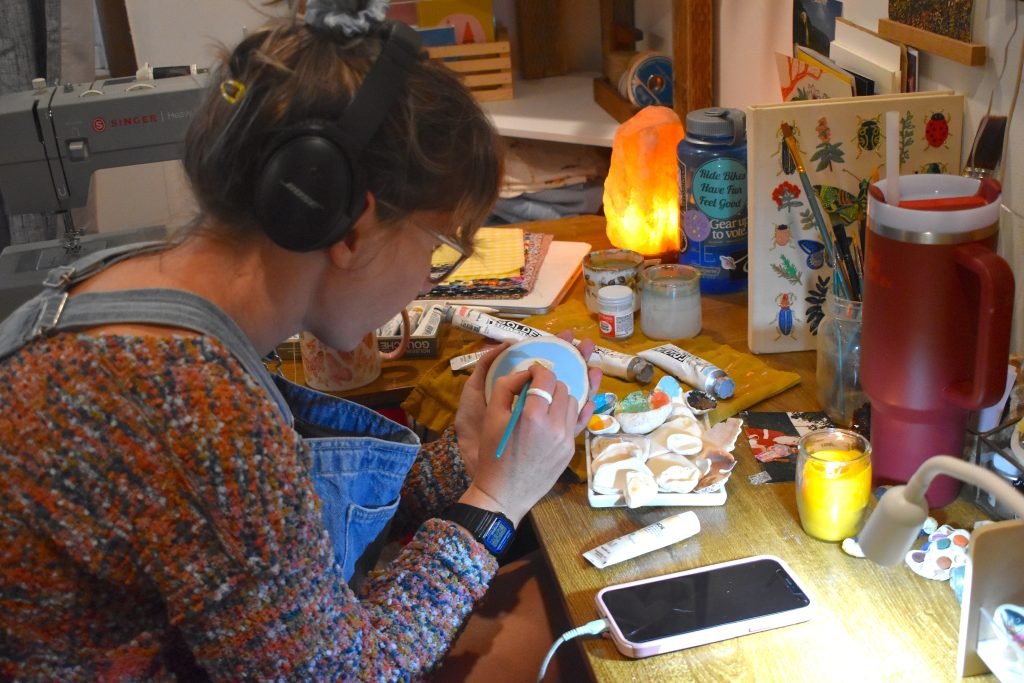
Like many asylum seekers, immigrants and refugees, Shayna Oosthuysen’s childhood was split between two worlds — the wild beauty of Southern Africa and the disorienting unknown of a new life in America.
The Rifle-based artist was raised on a multi-generational family farm in Zimbabwe. With no fences separating her home from the wild African bush, Oosthuysen spent her childhood immersed in nature and building fairy gardens from rocks, flowers and shells in her family’s sprawling yard.
“We lived on a farm where there are no fences or anything, and there’s just African bush,” Oosthuysen said. “My mom had these gardens of flowers and rocks and vines and huge trees and a lot of my childhood was spent down, deep in the garden.”
Her mother, an African wildlife artist, played a pivotal role in nurturing her creativity.
“(My mom) was always creating or painting and embracing her own creative world,” Oosthuysen said, explaining how her mother would use unique canvases like ostrich eggs. “I’m a lot like her and so she just inspires me…
“She would pull me aside all the time and be like, ‘Let’s make some homemade cards,’” she added. “She’s a very soft, kind person, like I am, and she just, in her own way, gives me permission to be in my own creative, daydreaming world.”
But in 2006, a changing political climate in Zimbabwe forced Oosthuysen’s family to seek asylum in the United States. At just 11 years old, she was uprooted from the only world she had ever known.
“We lost everything pretty traumatically,” Oosthuysen said. “Six months later, we came to the U.S. with a suitcase and started entirely from scratch.”
Caught between her identity in Africa and her new life in America, Oosthuysen struggled to adjust. Assimilation was difficult. She was bullied for her accent and eventually worked to shed it.
“I’m really thankful to be here and we have a lot of opportunities that we otherwise would never have had,” Oosthuysen said. “But immigration, no matter where you go or immigrate from or to, it’s just really, really hard.”
Throughout the transition, art became her compass. As a teenager, Oosthuysen used her canvases like visual diaries — full of vibrant colors and abstract swirls, each piece captured feelings she couldn’t always put into words. Today, free-form paintings remain a way for Oosthuysen, who was recently diagnosed with autism, to express emotions she can’t verbalize.
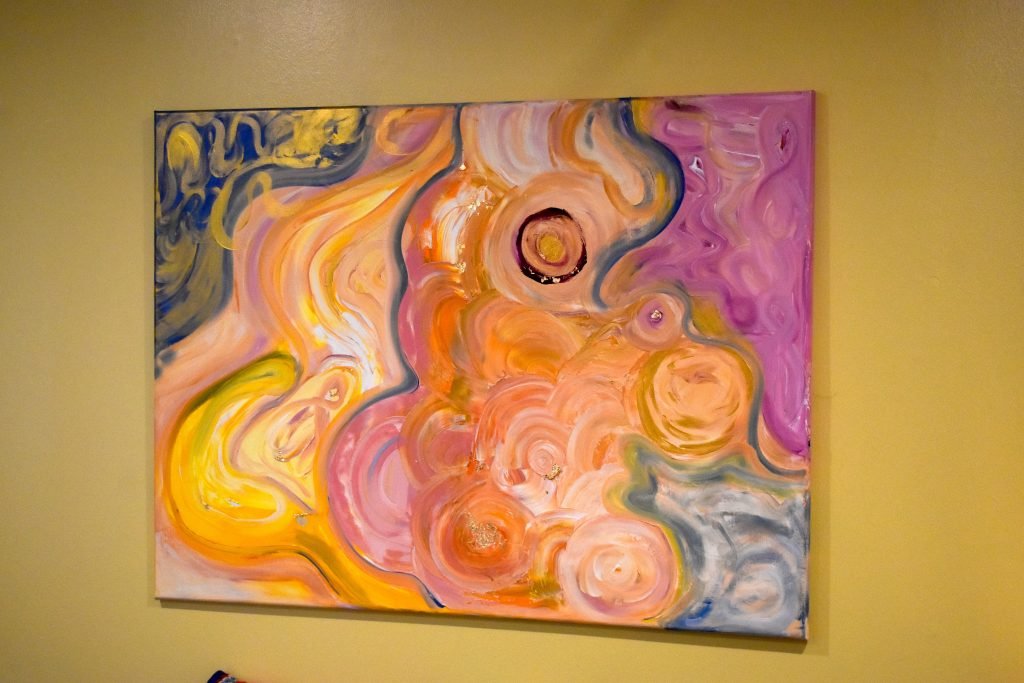
Though her creative pursuits have come in waves throughout adulthood, Oosthuysen made a life-changing decision in June: she quit her job to pursue art full time.
“Getting my art out there has been something I’ve been wanting to do for 10 years,” Oosthuysen said. “There are always better artists, but then, I was just like, why not?”
She launched her art under the name Flame Lily Works, inspired by Zimbabwe’s national flower. The flame lily is more than a symbol of home to Oosthuysen — it’s a metaphor for resilience.
“It actually looks like a flame and it’s very beautiful, but it’s also known to be able to grow in some really harsh environments and be able to bloom through drought and things like that,” Oosthuysen said. “…I love flowers, they are one of my most favorite things, but also it’s one thing that connects me to where I’m from, and then I feel like it’s very symbolic of me as a person.”
In recent months, Oosthuysen has sold her work at markets in Rifle and Carbondale and launched an Etsy shop under the name FlameLilyFairy.
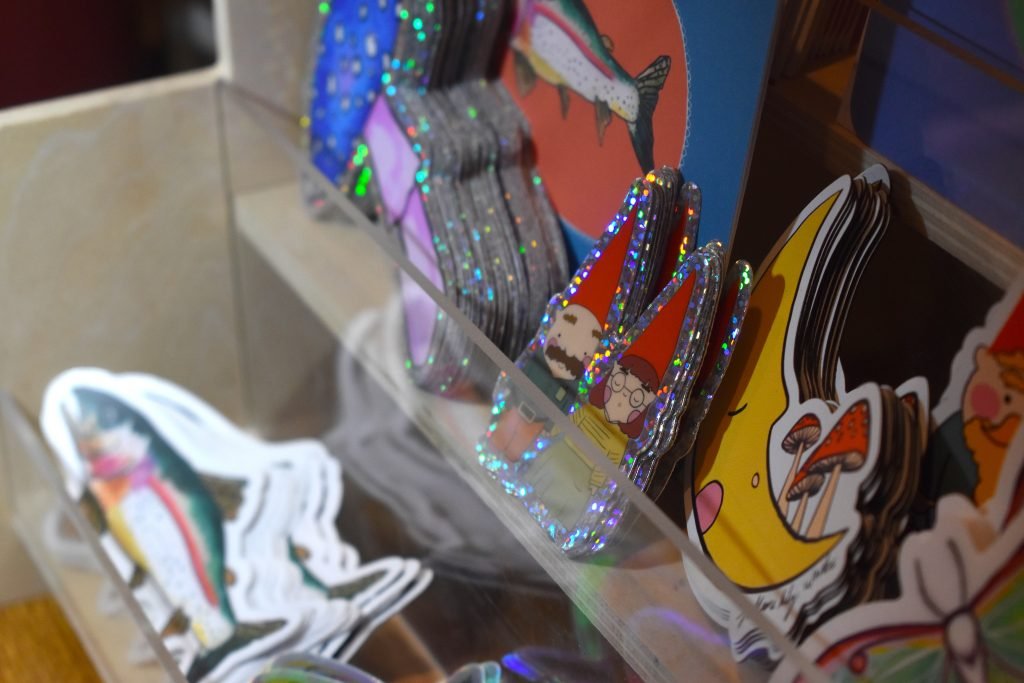
For Oosthuysen, art is more than just a passion — it’s a way of connecting back to the child she once was and the home in Zimbabwe she abruptly lost.
“My art now mostly is for little Shayna — that little gal who grew up in the bush and had all these different kinds of wild African animals around her and her family,” Oosthuysen said. “It’s my way of connecting back to her and for her.”
Her artwork — full of color, whimsy and the childlike sense of wonder that accompanied Oosthuysen during her adventures in the Zimbabwe bush — is for anyone who needs a little extra sparkle in their life.
Oosthuysen’s work is also a celebration of neurodivergence. She hopes to build a sense of belonging and community with other neurodivergent people through her abstract, emotive paintings in a collection titled “All Brains Are Beautiful”
“It’s nerve wracking, being a neurodivergent person,” Oosthuysen said. “It takes a lot of energy for me to get (to markets), but once I’m there, it’s really cool to be able to see people find joy or be inspired by my art.
“That’s really rewarding — to share it with the world knowing that the right people will find it who need it,” she added. “That’s the part that I really enjoy.”