- Opinion
- No Comment
Zimbabwe’s New Authoritarian Template: From coup to constitution

By Chenayi Mutambasere
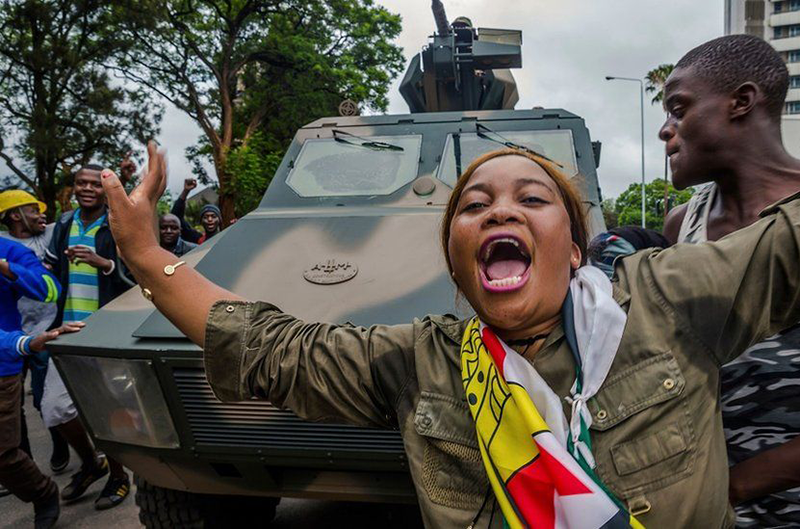
In November 2017, Zimbabwe entered a defining chapter in its political history when the military intervened to remove long-time ruler Robert Mugabe. The event was carefully choreographed and linguistically sanitised as a “military-assisted transition,” a phrase designed to avoid the stigma associated with coups. Yet, regardless of terminology, the essence of that moment lay in the displacement of constitutional order by force. What followed was a promise of renewal, reform, and a break from authoritarian excess. Nearly a decade later, those promises appear not only unfulfilled but inverted.
Zimbabwe now stands on the edge of what can only be described as a constitutional transformation with far-reaching implications. The proposed Constitutional Amendment (No. 3) Bill, 2026, is presented as a modernising reform, one that strengthens governance and aligns the country with contemporary constitutional practices. However, when placed within the broader trajectory of Zimbabwe’s recent political history, the Bill reveals itself as something far more consequential. It is not merely a set of adjustments to governance structures; it represents the consolidation of power through legal means. If 2017 marked the era of a government emerging through a coup, 2026 risks marking the moment when that power is entrenched through constitutional redesign.
To understand the significance of this moment, one must begin with the crisis of legitimacy that has defined Zimbabwe’s political landscape in recent years. The 2023 elections were not simply another contested poll in a long line of disputed outcomes; they represented a profound rupture in public trust. Questions around transparency, institutional independence, and the credibility of the electoral process left many Zimbabweans unconvinced that the outcome reflected the will of the people. This lack of legitimacy has cascading effects. Governments that are perceived as lacking a genuine mandate often struggle to govern effectively because their authority is constantly under question. Rather than seeking to rebuild trust through reforms that enhance accountability and inclusivity, such governments frequently turn inward, seeking to secure their position through structural means.
This is what scholars refer to as the legitimacy curse. It is a condition in which weak electoral legitimacy leads to poor governance outcomes, economic instability, and institutional decay. In Zimbabwe, this dynamic is visible in the widening gap between the state and its citizens, in the erosion of public confidence in key institutions, and in the persistent economic difficulties that continue to undermine livelihoods. Legitimacy is not an abstract concept; it is the foundation upon which effective governance is built. Without it, policy becomes reactive rather than strategic, and institutions become instruments of control rather than vehicles of public service.
It is against this backdrop that the Constitutional Amendment (No. 3) Bill must be examined. The Bill introduces several changes that, taken together, fundamentally alter the balance of power within Zimbabwe’s political system. At the heart of these changes is the proposal to shift the election of the President from a direct vote by the people to a parliamentary process. Under this new arrangement, the President would be elected by Members of Parliament sitting jointly, with the Chief Justice or a designated judge overseeing the process. On the surface, this might appear as a technical adjustment, one that aligns Zimbabwe with certain parliamentary systems elsewhere. However, in the context of a contested Parliament, this change effectively removes the citizenry from directly choosing their Head of State. It transforms the presidency from a position derived from popular mandate into one negotiated within political elites.
Disputed parliamentary representation
The changes being proposed are particularly significant in a country where parliamentary representation itself is disputed. If the composition of Parliament is not universally accepted as legitimate, then transferring the power to elect the President to that body creates a closed loop of authority. Legitimacy is no longer drawn from the people but is instead recycled within the political class. This is a profound redefinition of democratic participation, one that risks alienating citizens from the very process of governance.
The Bill further extends the term of office for both the President and Parliament from five years to seven years. While longer terms are sometimes justified on the grounds of policy continuity and stability, in fragile democracies they often have the opposite effect. By reducing the frequency of elections, they limit opportunities for citizens to hold leaders accountable and to correct political trajectories. In Zimbabwe’s case, where elections are already a source of contention, extending terms risks prolonging periods of disputed authority. It effectively delays the moment of democratic reckoning, allowing governance challenges to accumulate without the corrective mechanism of electoral renewal.
Equally concerning are the changes to the country’s electoral framework. The Bill proposes the restructuring of electoral management functions, including the transfer of voter registration and maintenance of the voters’ roll to the Registrar-General. Given Zimbabwe’s history, this is not a neutral administrative adjustment. The management of the voters’ roll has long been a contentious issue, with allegations of opacity and manipulation undermining confidence in electoral outcomes. By shifting these responsibilities away from an independent electoral commission to an office historically associated with executive influence, the Bill risks further eroding trust in the electoral process.
The cumulative effect of these changes is a centralisation of power within the executive. The President is granted the authority to appoint additional Senators, thereby increasing influence over the legislative branch. Judicial and prosecutorial appointments are also adjusted in ways that potentially weaken independent oversight. At the same time, key institutions designed to promote accountability and protect rights are either restructured or removed altogether. The abolition of the National Peace and Reconciliation Commission and the absorption of the Gender Commission into another body signal a retreat from specialised oversight mechanisms at a time when they are most needed.
Taken together, these provisions point to a broader pattern. Rather than strengthening checks and balances, the Bill appears to consolidate authority within a narrower circle of power. It reshapes the constitutional framework in ways that make it more difficult to challenge or replace those in office. This is why the term “constitutional coup” is not merely rhetorical. It captures the essence of what is unfolding: the use of legal instruments to achieve what was once done through force.
The cost of illegitimate government
The implications of this shift extend beyond the realm of politics into the economic sphere. Zimbabwe’s economy has long been characterised by instability, with high levels of domestic debt, currency volatility, and rising poverty. These challenges are not disconnected from the political environment. Investors, both domestic and international, are acutely sensitive to issues of governance and legitimacy. When political authority is contested and institutions are perceived as weak or compromised, confidence declines. Capital becomes cautious, and economic activity slows.
The legitimacy curse thus manifests economically as well. Poor governance leads to inconsistent policy, which in turn discourages investment and undermines growth. As economic conditions deteriorate, public dissatisfaction increases, further weakening the government’s standing. This creates a self-reinforcing cycle in which political and economic instability feed into one another. Zimbabwe’s current trajectory suggests that this cycle is already in motion, and the proposed constitutional changes risk deepening it.
Beyond Zimbabwe’s borders, the developments unfolding in the country carry significant implications for the African continent. In recent years, Africa has witnessed a resurgence of military coups, particularly in West Africa. These events have rightly attracted condemnation and concern. However, Zimbabwe may be charting a different, and potentially more insidious, path. Instead of relying on overt military intervention, it is demonstrating how power can be entrenched through legal and constitutional means.
This evolution represents a new frontier in authoritarianism. It is less visible than a coup, less dramatic than tanks on the streets, but no less consequential. By embedding control within the constitutional framework, it becomes more difficult to challenge and reverse. It also provides a veneer of legitimacy, as changes are enacted through formal legislative processes rather than force. If this model takes hold, it could be replicated in other contexts, creating a wave of constitutional manipulation across the continent.
For Zimbabweans, the stakes could not be higher. The Constitution is not merely a legal document; it is a social contract that defines the relationship between the state and its citizens. When that contract is altered in ways that diminish public participation and accountability, the very foundation of democracy is undermined. The proposed changes raise fundamental questions about the nature of citizenship and governance in Zimbabwe. Will citizens continue to play a direct role in choosing their leaders, or will that power be transferred to a political elite?
The response to this moment will shape the country’s future. Civil society, religious institutions, labour movements, and the broader citizenry all have a role to play in defending the principles of constitutionalism. This is not a call for resistance in the abstract, but a call for engagement, for vigilance, and for the assertion of democratic rights. Silence, in this context, is not neutral; it is acquiescence.
For the African region, Zimbabwe’s trajectory should serve as a warning. The challenge of safeguarding democracy is no longer limited to preventing military coups. It now extends to protecting constitutions from manipulation. Regional bodies such as the African Union and the Southern African Development Community must adapt to this new reality. They must develop mechanisms to identify and respond to constitutional backsliding, just as they have done with unconstitutional changes of government.
Ultimately, Zimbabwe stands at a crossroads. One path leads toward the renewal of democratic principles, the rebuilding of legitimacy, and the creation of a governance system that is responsive to the needs of its people. The other path leads toward the entrenchment of power, the erosion of accountability, and the normalisation of constitutional manipulation. The choices made in the coming months will determine which path is taken.
The events of 2017 blurred the line between constitutionalism and coercion. The developments of 2026 risk erasing that line altogether. If the Constitution becomes a tool for consolidating power rather than limiting it, then the promise of democratic governance is fundamentally compromised. This is why the moment demands attention, not only within Zimbabwe but across the continent.
The future is being written now, not in the language of tanks and decrees, but in the clauses and provisions of constitutional law. The question is whether that future will reflect the will of the people or the ambitions of those who govern them.
Chenayi Mutambasere is Executive Director at Zim for All Foundation, a development economist specialising in governance, digital transformation, social and economic justice.