- Featured
- No Comment
Companies take UK Supreme Court ruling against Zimbabwe to US in bid to enforce US$440m award

By Own Correspondent & Agencies
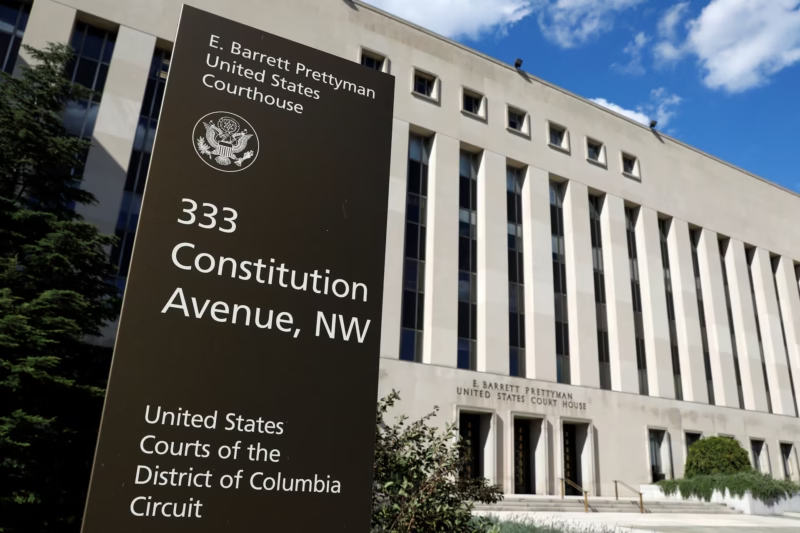
LONDON: Two companies and a Swiss-German family have taken to a United States federal court a recent decision in their favour by Britain’s Supreme Court as the seek to enforce a US$440m award against Zimbabwe.
In a landmark ruling delivered on March 4 this year, Britain’s Supreme Court rejected Zimbabwe’s sovereign immunity defence against recognition and enforcement of the award in the United Kingdom.
Forestry companies, Border Timbers Ltd. and Hangani Development Co. (Private) Ltd, are pressing for enforcement of the arbitration award against Zimbabwe in both the United States and the UK.
In the US the companies joined the Swiss-German von Pezold family of landowners in petitioning the D.C. court to consider the Supreme Court of the United Kingdom‘s judgment against Zimbabwe.
The London case involved a parallel action by Border Timbers and Hangani against Zimbabwe seeking the U.K. court’s registration of the same $164.2 million International Centre for Settlement of Investment Disputes (ICSID) award favouring the companies.
According to the Border Timbers petitioners, the U.K. Supreme Court’s judgment in their favour reflects their view that under the ICSID Convention, the United States is obligated to recognize and enforce the award “and that subsequent execution of the award in the United States is governed by U.S. law”.
“U.S. courts have recognized this distinction under the ICSID Convention between enforcement and execution,” Border Timbers and the von Pezolds said in their recent joint notice of supplemental authority.
“In contrast, Zimbabwe argued that execution should be governed by Zimbabwe law. The U.K. Supreme Court agrees with petitioners.”
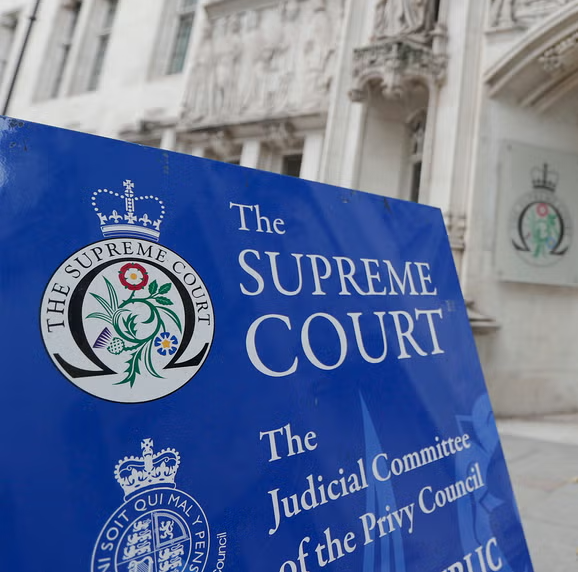
The joint notice then pointed to the U.K. top court’s examination of a contracting state’s obligation to recognize and enforce ICSID awards.
“Under Article 54(1) [of the ICSID Convention] each contracting state is obliged to recognise as binding and enforce the pecuniary obligations of an award rendered pursuant to the ICSID Convention as if it were a final judgment of its own courts,” the March 4 judgment said in part.
“It follows that, upon becoming party to the ICSID Convention, a contracting state not only assumes that obligation to recognise and enforce ICSID awards but also consents to the fact that all other contracting states are undertaking the same obligation.”
Zimbabwe in February 2025 opposed a bid for summary judgment by the two forestry and sawmill companies and the Swiss-German family, several months after the D.C. Circuit ruled that a lower court could enforce the $440 million worth of arbitral awards against the country.
The country argued in its brief opposing summary judgment in D.C. federal court that enforcement favouring the von Pezold family as well as Border Timbers and Hangani must be denied under Zimbabwean law.
In November 2024, the D.C. Circuit agreed with the lower court that the country, which brought the appeal, had waived its sovereign immunity in the land dispute and affirmed the enforcement of the awards.
The Border Timbers and von Pezold petitioners asked in January 2025 for summary judgment following the appeals court’s ruling.
Zimbabwe now argues that the appeals court’s decision along with an incorrect calculation of damages by the Border Timbers petitioners and double compensation sought by Border Timbers and the family prevent resolution by summary judgment.
Further, Zimbabwe said, the petitioners no longer have standing because the November 2024 appellate ruling in Elisabeth Regina Maria Gabrielle von Pezold’s case requires that the awards be enforced in accordance with Zimbabwean law.
The International Centre for Settlement of Investment Disputes tribunal sided with the von Pezold family in July 2015, finding that Zimbabwe had illegally expropriated its three estates, including the African country’s largest tobacco growing and curing operation, amid a land-reform effort a decade prior.
The same tribunal found in favour of the two Zimbabwe-based companies, Border Timbers and Hangani Development, which alleged similar expropriation.
The ICSID awards granted compensation for the impact of the 1990s land reform programme that Zimbabwe’s government enacted in an attempt to return the southern African nation to its Indigenous people.
Border Timbers obtained a $164.2 million ICSID award in July 2015 after the tribunal found that Zimbabwe expropriated its forestry plantation in eastern Zimbabwe during the land reform program, according to its 2021 enforcement petition.
Meanwhile, the von Pezolds, former majority shareholders in Border Timbers, also filed their own petition seeking to realize the separate, more than $276 million award they had won in proceedings arising from the same dispute.
The twin lawsuits in the D.C. district court aim to enforce the two arbitral awards that hold Zimbabwe liable for $440.2 million, arguing that the court plainly has jurisdiction under the arbitration exception contained in the Foreign Sovereign Immunities Act.