- Diaspora
- No Comment
SA court orders Zim man buried in Cape Town; widow wins bitter row with late husband’s family

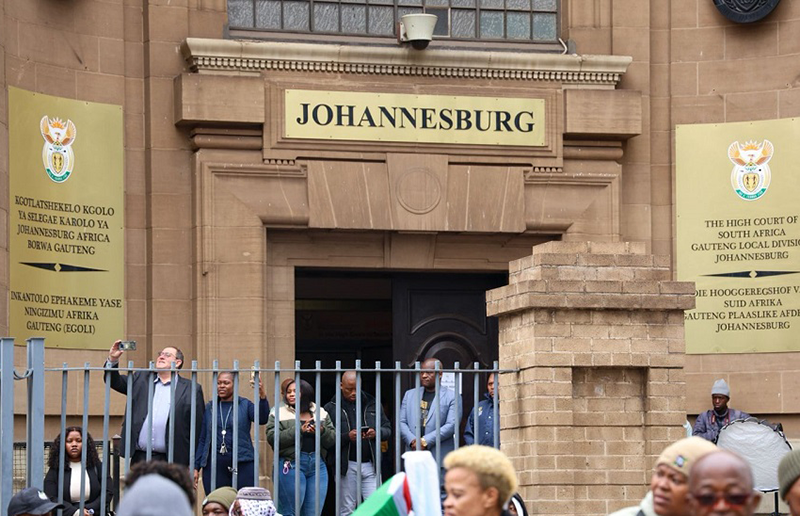
Children’s wishes prioritised after urgent interdict halts body’s transfer to Zimbabwe
By The Sowetan
JOHANNESBURG: A widow and her children were thrust into a tense legal battle in the high court after the family of the deceased attempted to take the body to Zimbabwe.
The widow and her children have, however, won the right to bury the man in Cape Town, where they lived for years. This was after the high court in Joburg found the right to bury belonged to his children.
“The harm would be irreparable, and there is no other satisfactory redress available for the deceased’s children,” said judge Mokate Victor Noko.
According to the judgment, the woman initiated urgent court proceedings, interdicting the family from taking the body to Zimbabwe a month ago, saying she and the deceased were married in customary law since 2001. She attached a lobola letter to her founding affidavit. The two also share two children.
Before relocating to Cape Town where the deceased was running his security company, the two lived in Berea, Johannesburg.
His son, the second applicant in the matter, claimed that when his father was being rushed to hospital after sustaining burn injuries, he said his wish was to be buried in Cape Town. The man died at the Tygerberg Hospital.
However, when the woman went to the hospital with the undertaker to transfer the body to a private mortuary, she was told a Mr Dube had already claimed the body.
The legal position agreed upon by both parties is that the children of the deceased have the right to decide on burial when there is no will. The parties further recognised that the principle of primogeniture is outlawed in South Africa
— Judge Mokate Victor Noko
The deceased’s elder brother, Johnson Mahoka Dube, from Zimbabwe, who opposed the application, said the woman and his brother were not married. He further claims the two were both from Zimbabwe, accusing them of fraudulently obtaining SA identities and citizenship.
 He submitted:
- photographs taken during a ceremony in Zimbabwe, at which the deceased and the woman attended an event;
- a copy of the Facebook page where the Dubes’ family wished the woman a happy birthday; and
- several affidavits from the deceased’s children from Zimbabwe, including photos with their stepbrother, the second applicant.
According to the judgment, they were permitted to take the body after presenting a handwritten letter from the Zimbabwean Consulate in SA and a letter from the Zimbabwean authorities in Plumtree, where the deceased was born.
However, the lawyer representing the woman argued that a statement from the department of home affairs, clearly showed that the deceased was a South African. This was despite home affairs official’s statement that the deceased had previously been flagged and cleared.
On the other hand, the lawyers representing the Dube family said there was evidence the man was Zimbabwean, which was confirmed by the consulate.
Noko said the court could not determine the dispute regarding the validity of the marriage, which was closely linked to the citizenship status of the couple, which would require oral evidence. He said the determination of the validity of the marriage did not preclude determining the question of burial, which was the issue before this court.
“The legal position agreed upon by both parties is that the children of the deceased have the right to decide on burial when there is no will. The parties further recognised that the principle of primogeniture is outlawed in South Africa,” said Noko.
The right to decide does not only rest with the eldest child and that it was undisputed that the woman and the deceased have two children, he said.
“Based on the undisputed evidence regarding the deceased’s children, one of whom is the second applicant, I conclude that his decision should be taken into consideration.
“The second applicant’s brother, who was born in 2009, is a minor, and his well-being is to be decided by the court as the upper guardian of the minor children. I therefore conclude that on behalf of the minor, the deceased should be buried in Cape Town. My decision aligns with the wishes of the second applicant [the deceased son].”