- Diaspora
- No Comment
‘Voice for the voiceless’: University student from Zimbabwe faces uncertain future under Trump’s immigration policy

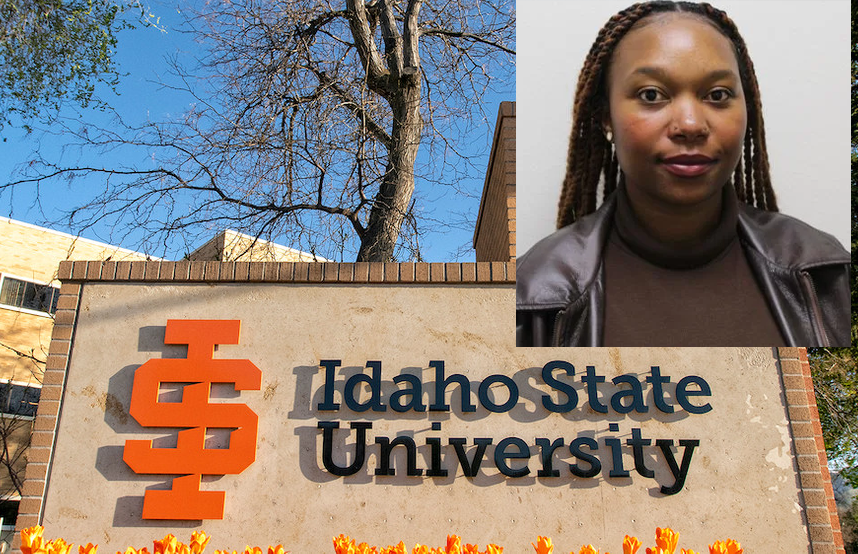
POCATELLO: She has a degree she is not sure she can use, a home she is unsure she can return to and $600 she is unsure she can spend.
For Mufaro Mushonga, graduation is weeks away. But instead of celebrating, she is calculating risk — and time may be running out.
Mushonga, a senior social work student at Idaho State University, is one of hundreds of international students across Idaho navigating a rapidly shifting immigration landscape. Her story illustrates the real human stakes behind federal policy — suspended timelines, financial gambles and the daily anxiety of building a life in a country that is intensifying immigration enforcement.
Mushonga arrived in the United States in 2022, following her mother, who came to ISU in 2016 to pursue a doctorate and later married a U.S. citizen. Her mother has since moved to Colorado and is still awaiting a green card. Enrolling in school was the most straightforward way for Mushonga to join her family.
By the time she finished high school in Harare, Mushonga already had an interest in business, inspired by her father’s role managing a small company. She earned a degree in supply chain management but faced a decision about the future she wanted to build.
“Family is the main reason I came here,” Mushonga said. “But the easiest way to come here and join my family was through school, because I had my first degree back home. The opportunities back home are not really as good as the opportunities here. So it was either I continue with my studying, my masters, or I start another degree — and my mom was very passionate about social work.”
Social work is not well-established in Zimbabwe. While people still support and help each other, the field does not have a large role in the broader community. But helping others was central to her family’s values, and she sought new opportunities in the United States.
A strong academic record helped ease the financial burden of studying abroad. A tuition waiver based on her GPA reduced her costs from roughly $16,000 to approximately $5,000 per semester.
Culture Shock
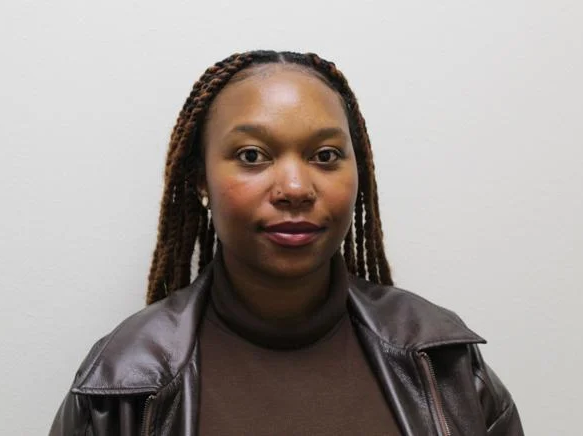
When Mushonga arrived in the Intermountain West, the culture shock was real. Zimbabwe is around 95 percent Black, a far different demographic than Idaho. Pocatello is also considerably smaller, surrounded by vast stretches of remote agricultural land.
One of the biggest cultural differences she has encountered is the strong sense of American individualism.
“People usually keep to themselves, and back home, it takes a village,” Mushonga said. “It’s more community-based. I don’t really see people outside unless I go to the grocery store. I don’t even know my neighbours, which is very weird. I know there are people next door, but I’ve never really seen them or engaged with them. That was the biggest shock.”
Differences in food were also apparent. In Zimbabwe, organic food is inexpensive and accessible. Now she lives across from a McDonald’s on Fifth Street.
“Back home, if you want fast food, you literally have to go into the city,” Mushonga said. “Here, you can just walk across the street. I think I gained 30 pounds since I came here.”
Not everything has been easy, however. Mushonga expressed frustration with locals treating Africa as a monolith — one country, one culture, one people. Africa is a continent of enormous diversity, not a single nation.
“It’s literally 54 countries with — I don’t know how many — languages and different cultures,” Mushonga said. “I didn’t even know about other African countries until I came here. I would know of them, because I know the geography, but I didn’t know that there’s a country called Guinea.”
Someone once asked if she knew a person from Nigeria. Zimbabwe and Nigeria are thousands of miles apart.
Despite those frustrations, she is still working to build community and uplift other Africans and international students.
“I feel like Africans are more communal,” Mushonga said. “We’re very big on family, very big on fostering relationships around the community and our neighbours.”
She said African international students are largely trying to build something from scratch — a support system in a city that, despite its genuine friendliness, was not built with them in mind.
“It’s tough to have a community in a place where people don’t really understand us,” Mushonga said.
She has not experienced overt racism, though strangers have been curious about her accent or have stared at her dreadlocked hair. She felt offended at first but has since grown accustomed to it. Most people she encounters are kind, even if they sometimes assume she needs help when she does not.
Uncertain Future
Mushonga will walk across the stage at ISU’s commencement ceremony May 9. What happens in the 60 days after that is uncertain.
After graduation, international students on F-1 visas have 60 days before their status expires. One path forward is Optional Practical Training, or OPT — a programme that grants one year of work authorization in a graduate’s field of study. The application fee is $600 and nonrefundable.
Zimbabwe is on the partial travel ban list under the Trump administration, making OPT approval uncertain for Mushonga. She has consulted with ISU’s International Programs Office, which advised her that pursuing a master’s degree could provide better stability.
“It’s $600 to apply, and I might apply for something I won’t receive, and they won’t give me my money back,” Mushonga said. “I don’t know if I should apply or not. It’s a very scary time to be an international student right now.”
She has since applied to a master’s programme in Boise. If she is not accepted, she says she will likely have to return to Zimbabwe — without the U.S. work experience she came to build.
Difficult to go back home
Further complicating her situation is the fact that she has not returned to Zimbabwe since 2024, afraid that changing policies could prevent her from re-entering the United States. She is careful about her immigration status, avoiding run-ins with local police and largely keeping to herself. Other international students share that fear — many do not go outside unless necessary, moving between work, school and home.
“(Immigration policies) are making it difficult for us to go back home,” Mushonga said. “If I do go back home, will I be able to come back in?”
International students are also restricted from working off campus. On-campus jobs pay around $11 an hour with limits on hours worked — rarely enough to cover rent and groceries. Mushonga has supplemental support from her mother, but she knows most international students are not as fortunate.
She does not understand why those restrictions have to be so absolute.
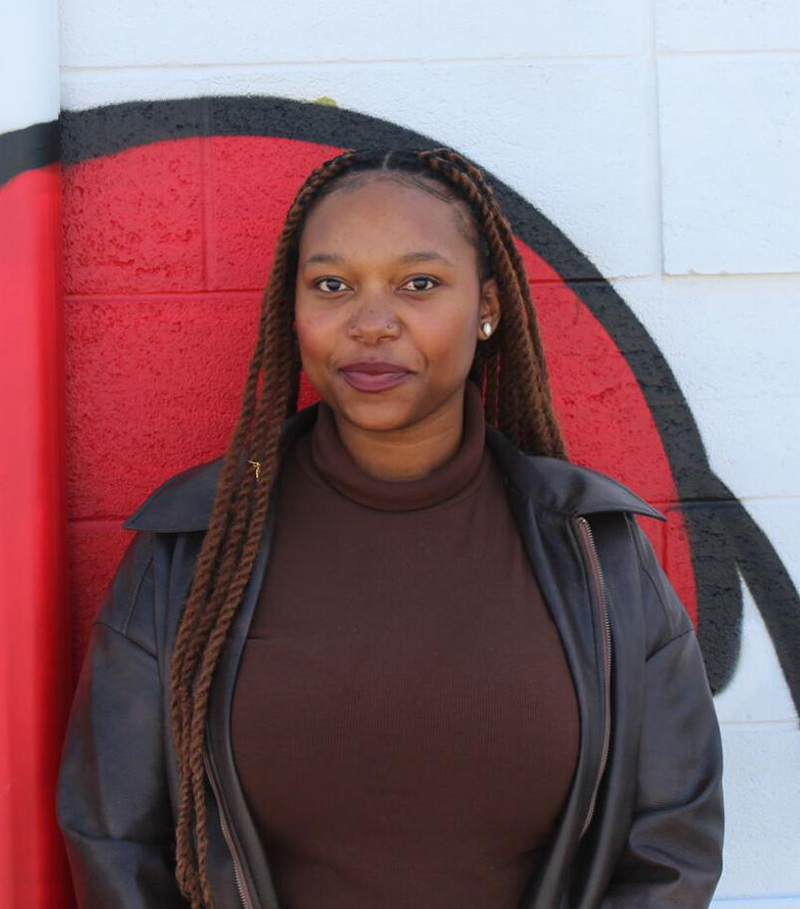
“Is it the worst thing for me to want to work outside of campus?” Mushonga said. “It’s not like I’m doing anything illegal. I’m working for my money. If I’m working within my profession and I’m paying taxes and I’m being an upstanding citizen, I don’t think it’s the worst thing that could happen.”
Through her internship with Bridges, a local organization that works with immigrants and underserved populations, Mushonga has found her footing. She is now pursuing a master’s degree in public administration rather than social work and also volunteers at Health West.
Bridges is deliberate about protecting her visa status, excusing her from meetings that could jeopardize her immigration standing. Much of the work with undocumented clients is done virtually. Area churches serve as trusted gathering points and safe spaces for the community.
Mushonga does not miss the irony of her position.
“They’re always saying social work advocacy is the best thing you can do, to advocate for people that cannot stand for themselves,” Mushonga said.
“I don’t know if I’m the best person to advocate because I’m also going through the same experiences with all the international students. But as an aspiring social worker, it’s my duty to advocate for those people that are voiceless. I’m trying.”
Negative perceptions
She wants to correct negative perceptions about international students and their role in the local economy.
“We’re not here to steal anyone’s opportunities,” Mushonga said. “If there’s a chance for me to serve this community, I’m going to serve. While we’re doing that, we’re actually helping the economy here as well.”
International students pay significantly higher tuition rates than domestic students, revenue that flows directly into universities and local economies.
“We’re just here to make a better living for ourselves,” Mushonga said.
To her fellow international students, her advice is measured and weary in equal parts: prioritize mental health, find people you trust, be careful and keep your head down.
The constant barrage of news gives Mushonga anxiety, but she cannot look away — not with what she does, not with what is at stake. Despite the uncertainty, and the risks of speaking out amid intensifying immigration enforcement, she continues advocating for mental health awareness and community support.
“I think people should be kinder to themselves for their mental health,” Mushonga said.
“Growing up in a place where mental health is not a big thing — my being here — I’ve learned that you need to be kind to yourself. You need to take care of yourself, find some things that bring you peace or things that bring you joy.
“Personally, for me, I’m a Christian, so I turn to my religion to find comfort, having a great support system, people that you can talk to.”
Mushonga will graduate in May. She will smile for the photos and celebrate with those she loves.