- Featured
- No Comment
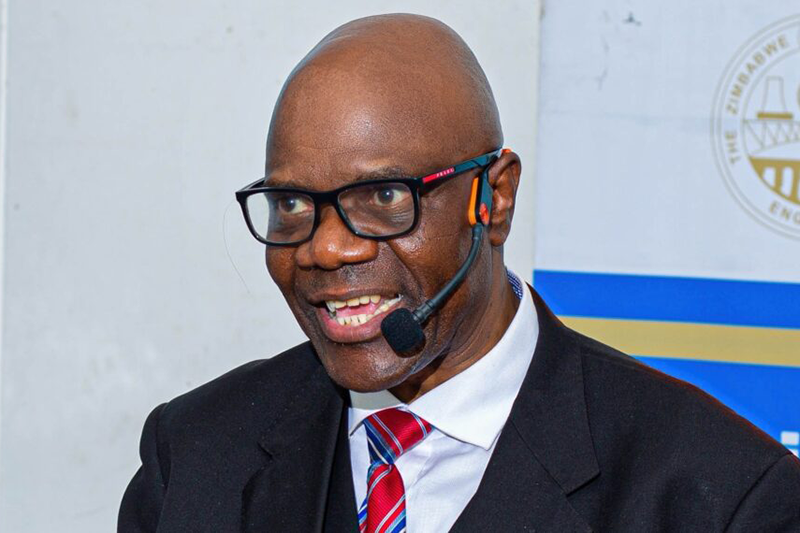
UGANDA: Prof Mutambara challenges Africa on AI – ‘We must have a national AI vision; We must have a continental AI vision’

By Agencies
UGANDA: Academic and technology expert Professor Arthur G.O. Mutambara has called on Africa to take a leading role in the global digital and Artificial Intelligence (AI) revolution, urging the continent to move beyond consumption and become creators and innovators.
Mutambara, who the Director and Full Professor at the Institute for the Future of Knowledge, University of Johannesburg, emphasised Africa’s vast potential.
Speaking during a panel at the Uganda Development Finance Summit held at Speke Resort in Munyonyo, Prof Mutambara outlined four critical prerequisites for the continent’s transformation: awareness, energy, infrastructure, and capital.
“We must be producers, not just consumers, of this new existence. We must create. We want a piece of the global pie—not just at home, but also with donors and partners,” he said.
“Why can’t Africa claim its fair share? We are a continent of 1.4 billion people, contributing a GDP of about $3.45 trillion, and holding immense mineral wealth. Africa must rise.”
“Awareness must lead to energy, energy must power infrastructure, and infrastructure must attract and channel capital. With these in place, we can truly drive our economies forward,” he explained.
He highlighted the transformative potential of AI, cautioning that Africa cannot simply adopt solutions developed elsewhere.
“The AI revolution is already transforming every sector of the global economy. Africa must not just consume these solutions—we must also use AI within our own DFIs and institutions. AI can make us ten times more productive, more efficient, and more innovative,” he said.
Mutambara stressed that AI adoption must be deliberate and ambitious, supported by a clear framework of vision, strategy, and implementation, applied at national, regional, and continental levels.
“We must have a national AI vision, strategy and implementation matrix. We must have a regional AI vision, strategy and implementation matrix. We must have a continental AI vision, strategy and implementation matrix.”
“Today, 95% of complex tasks can already be accomplished by AI, supported by just a handful of human experts. We must become both deployers and creators of AI,” he added.
He pointed to global examples where AI has been elevated to the highest policy levels: “The United Arab Emirates (UAE) appointed a Minister of AI. Singapore, Malaysia, Mauritius, China, and India are also elevating AI to cabinet-level leadership.
“The key lesson is this: AI cannot remain a subset of ICT—it must be a standalone priority if we are serious. Africa, too, must raise AI to cabinet-level leadership and act decisively. Only then can we unlock our full potential.”
He urged African leaders, institutions, and innovators to harness the continent’s talent, resources, and strategic vision to drive sustainable growth and technological self-determination.
“The real question is—what are the key implementation steps that will help us transform? The time to act is now.”
A parallel session moderated by Collin Babirukamu, Executive Director IT at the Bank of Uganda, brought together top experts, including Dr. Monica Musenero, Uganda’s Minister of Science, Technology and Innovation, and Arshad Rab, CEO of the European Organisation for Sustainable Development, to discuss Africa’s economic transformation in a technology-driven world.”
“If you want to take part in economic transformation, then you have to be a deeper participant in technology,” said Dr. Musenero.
“Just because you have access to artificial intelligence does not mean that you are benefiting from it. You must understand what the economy is and what technology is.”
She emphasised the role of human capital in driving innovation: “We have not put enough emphasis on empowering the human being. All the products that we have today are products of thought and ideation. Once you create an atmosphere that enables creativity, humans will find solutions that expand the economy.”